
Page Outline
- Direct Quick Answer
- Introduction – Overview of Global Military Power in 2026
- What Determines the Strongest Military? (Ranking Criteria)
- Top 10 Strongest Militaries in the World in 2026
- Top 10 Military Strength Comparison Table (2026)
- Regional Military Power Breakdown
- Most Powerful Army by Military Branch
- Military Technology & Future Warfare Trends (2026)
- Frequently Asked Questions – Strongest Military in the World 2026
- Conclusion – Summary of Global Military Strength in 2026
- Sources & References
The strongest army and most powerful military in the world in 2026 is the United States, holding the #1 position in the global military ranking 2026 with a PowerIndex score of approximately 0.0744 (lower is stronger). With a defense budget of around $886 billion, unmatched air and naval power including 11 aircraft carriers and over 13,000 military aircraft, advanced nuclear deterrence, and superior technology, the U.S. remains the dominant military force in 2026. Its global strength is reinforced by worldwide bases, continuous innovation, and strategic alliances such as NATO.
Introduction – Overview of Global Military Power in 2026
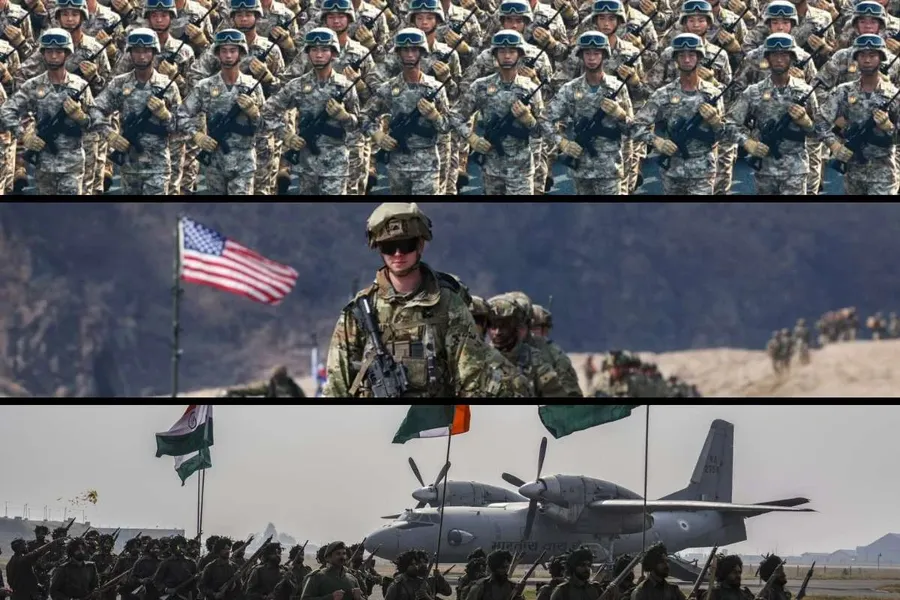
The strongest army and most powerful military in the world in 2026 reflects a highly competitive global defense environment where nations balance manpower, advanced technology, strategic reach, and long-term sustainability. Modern military strength is no longer defined by troop numbers alone but by the ability to project power across land, air, sea, cyber, and space domains.
Global military rankings in 2026 are determined through comprehensive evaluations such as the Global Firepower Index, which considers defense budgets, weapons systems, logistics, industrial capacity, nuclear capability, and alliance networks. Heightened geopolitical tensions across the Asia-Pacific, Europe, and the Middle East make military power a critical factor in deterrence and global stability.
Understanding the strongest military in the world 2026 helps explain shifts in international security, from continued U.S. global dominance to China’s rapid naval and missile expansion and Russia’s sustained land-based and strategic military resilience.
What Determines the Strongest and Most Powerful Military in the World? (2026 Ranking Criteria)
In evaluating the strongest military in the world 2026, experts rely on multifaceted, data-driven methodologies that go far beyond simple headcounts of troops or tanks. The strongest army/military in the world 2026 emerges from a careful balance of conventional firepower, technological superiority, economic sustainability, logistical resilience, and geopolitical positioning. These criteria ensure that rankings reflect real-world war-fighting potential in prolonged offensive or defensive campaigns, not just theoretical paper strength.
Global Firepower Index Explained
The Global Firepower Index (GFP) stands as the most widely recognized and objective benchmark for determining the strongest military in the world 2026. This annually updated system assesses 145 nations using over 60 individual quantitative and qualitative factors, culminating in a PowerIndex score where a lower value indicates greater overall military capability (a perfect 0.0000 is theoretically unattainable). The GFP formula deliberately avoids overemphasizing any single category, instead applying weighted categories to create a holistic view of sustained military effectiveness in the global military ranking 2026.
For instance, a nation may boast massive equipment numbers but score lower if logistics or geography hinder deployment—highlighting why the strongest army in the world 2026 requires depth across all domains. The index draws from publicly available defense data, official reports, and expert analysis to provide transparency and consistency year after year.
- Manpower: This category measures total available human resources, including active-duty personnel, reserves, paramilitary units, and annual reaching military age fit-for-service population. In the strongest military in the world 2026, sheer numbers provide staying power in attrition-based conflicts, but quality of training, readiness, and conscription systems matter equally—China's 2+ million active troops exemplify scale, while elite units in smaller forces add qualitative edge.
- Defense budget: Annual military expenditure directly fuels research, development, procurement, maintenance, and personnel costs. The US's staggering ~$886 billion budget in 2026 enables unmatched modernization cycles (e.g., next-gen fighters, AI integration), giving it decisive advantages in the strongest army/military in the world 2026—high spending correlates strongly with technological leadership and force readiness across the most powerful militaries 2026.
- Weapons & equipment: Detailed inventories cover land systems (tanks, armored vehicles, artillery), air assets (fighters, bombers, helicopters, tankers), and naval tonnage (carriers, submarines, destroyers). Quantity is balanced against quality and modernity—Russia's ~12,000 tanks provide land dominance potential, but US stealth aircraft and carrier strike groups ensure superiority in contested environments for global military ranking 2026.
- Logistics & technology: Fuel production capacity, merchant marine fleet, port/airport infrastructure, road/rail networks, and advanced tech integration (command-and-control systems, satellite comms) determine whether a force can sustain operations far from home. In the strongest military in the world 2026, superior logistics often decide victory—US global supply chains and allied basing contrast with regional constraints faced by others.
- Geographic & economic factors: Natural resources (oil, rare earths), coastline length, land borders, terrain variety, and industrial base (manufacturing output, workforce) influence long-term endurance and self-sufficiency. Geography can be a multiplier (e.g., island nations like Japan emphasize naval power) or a vulnerability (landlocked states face supply challenges), shaping the overall power projection of the strongest army in the world 2026.
Other Important Army/Military Strength Factors
Beyond the core GFP categories, several critical elements further define the strongest military in the world 2026, especially in hybrid, high-tech, and great-power competition scenarios. These factors often tip the scales in modern warfare where traditional metrics alone fall short.
- Nuclear capability: While GFP focuses primarily on conventional forces, nuclear arsenals (warhead counts, triad delivery via ICBMs, bombers, and ballistic missile submarines) serve as the ultimate strategic deterrent. The US (~5,200 warheads) and Russia (~5,889) maintain credible second-strike postures, ensuring mutual assured destruction dynamics that underpin stability—and deterrence—in the strongest military in the world 2026 landscape.
- Cyber & space warfare: Offensive and defensive cyber units, electronic warfare suites, and extensive satellite constellations (reconnaissance, navigation, communication) now dominate information and electromagnetic domains. Leading powers invest billions in resilient space architectures and cyber command structures—disrupting enemy C4ISR (command, control, communications, computers, intelligence, surveillance, reconnaissance) can neutralize superior conventional forces, making these domains decisive for most powerful militaries 2026.
- Strategic alliances: Formal pacts like NATO (collective defense under Article 5), QUAD (Indo-Pacific security), AUKUS (nuclear submarine tech sharing), and bilateral treaties multiply effective strength exponentially. Alliances provide shared intelligence, joint exercises, forward basing, and burden-sharing—transforming individual national capabilities into coalition dominance, a key reason the US-led network sustains its edge in global military ranking 2026.
Together, these criteria create a nuanced, realistic picture of military power, ensuring the strongest army/military in the world 2026 is not just the biggest or most expensive, but the most capable across diverse operational environments and emerging threats.
Top 10 Strongest Militaries in the World in 2026
The strongest militaries in the world 2026 blend scale, innovation, and strategy. Below are detailed profiles with stats and strategic insights for the global military ranking 2026.
1. United States – World’s Most Powerful Military 2026
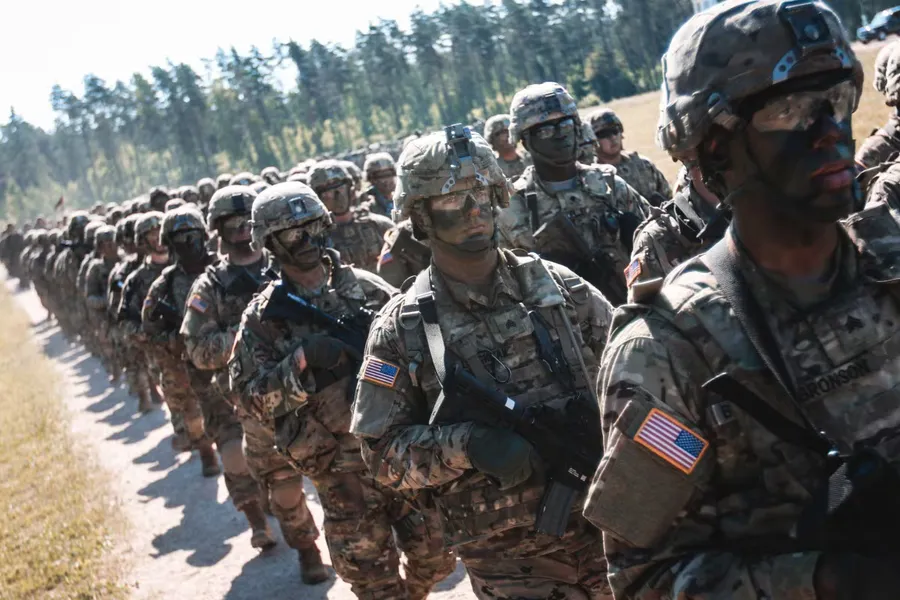
- PowerIndex: ~0.0744
- Active Personnel: ~1.3 million
- Defense Budget: ~$886 billion
- Major Equipment: 13,000+ aircraft, 11 aircraft carriers, ~5,200 nuclear warheads
US remains the strongest army/military in the world 2026 due to unparalleled tech (F-35 stealth fighters, hypersonics), 800+ global bases, and NATO leadership—ensuring dominance in any theater.
2. Russia – Strategic Power & Nuclear Capability

- PowerIndex: ~0.0788
- Active Personnel: ~1.1 million
- Defense Budget: ~$126 billion
- Strengths: ~12,000 tanks, ~5,889 nuclear warheads, advanced air defenses
Russia excels in land warfare and nuclear triad, making it a key player in the strongest military in the world 2026 despite sanctions.
3. China
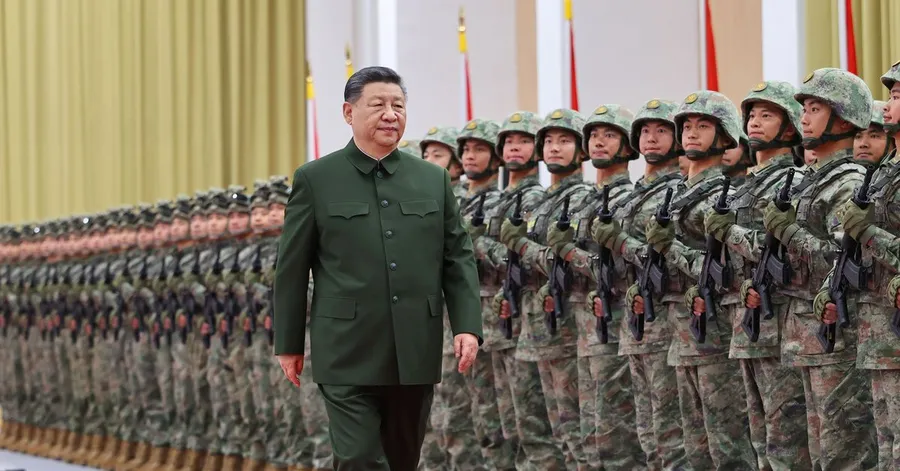
- PowerIndex: ~0.0788
- Active Personnel: ~2.0 million+
- Defense Budget: ~$267 billion
- Strengths: World's largest navy by hulls, hypersonic missiles, rapid modernization
China's rise challenges US dominance in Asia, positioning it among the most powerful militaries 2026.
4. India
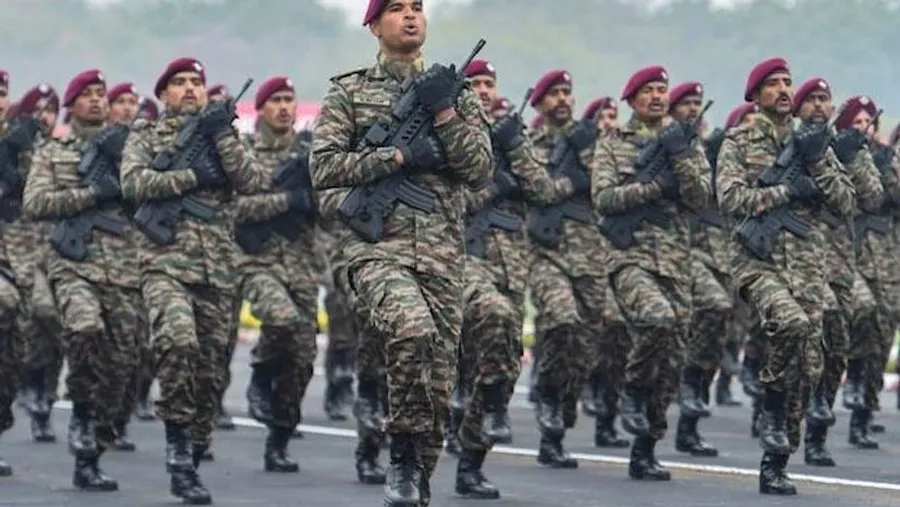
- PowerIndex: ~0.1184
- Active Personnel: ~1.45 million
- Defense Budget: ~$75 billion
- Strengths: Massive reserves, growing indigenous tech (Tejas fighters, missiles)
5. South Korea
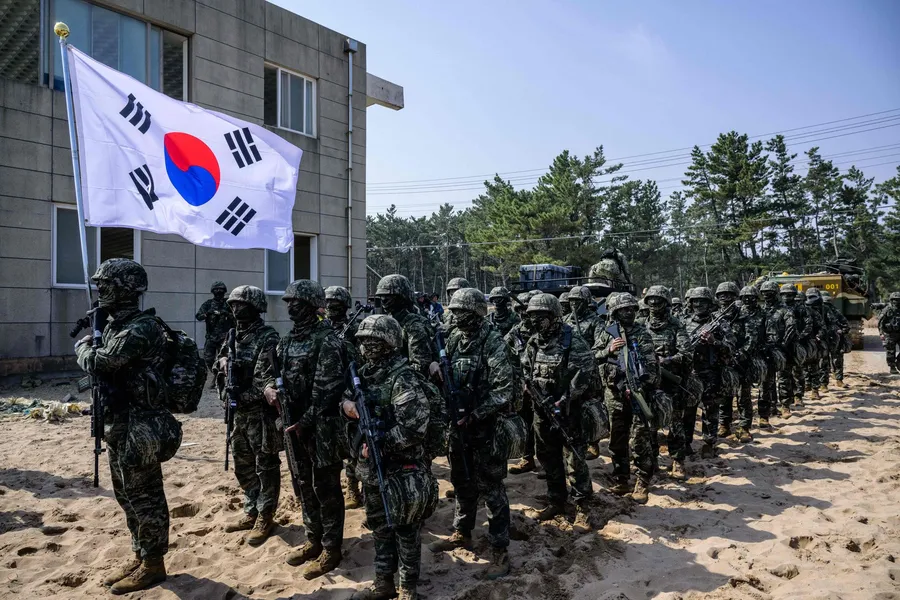
- PowerIndex: ~0.1416
- Active Personnel: ~500,000
- Defense Budget: ~$50 billion
- Strengths: High-tech (K2 tanks, K9 artillery), conscription
6. United Kingdom
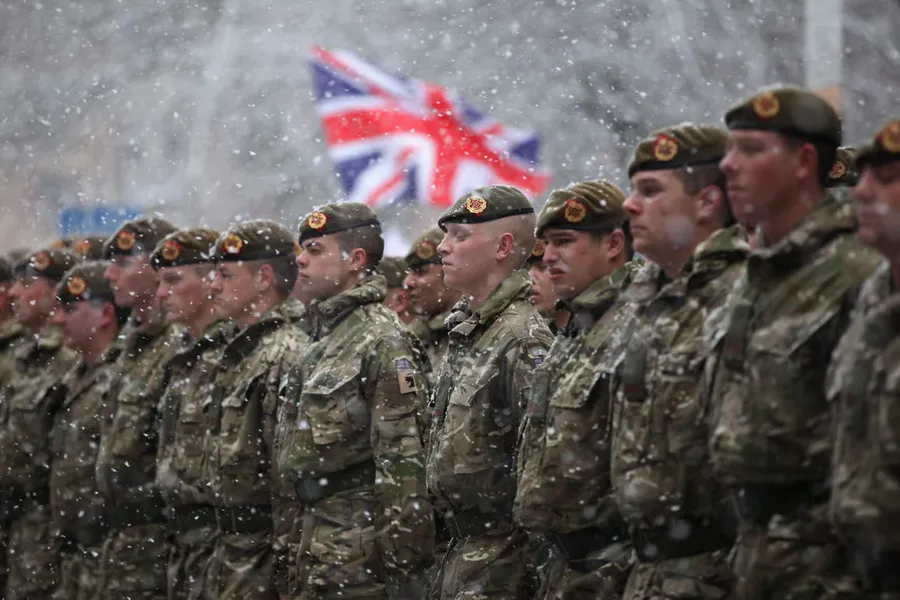
- PowerIndex: ~0.1443
- Active Personnel: ~185,000
- Defense Budget: ~$68 billion
- Strengths: 2 carriers, nuclear subs, NATO integration
7. France
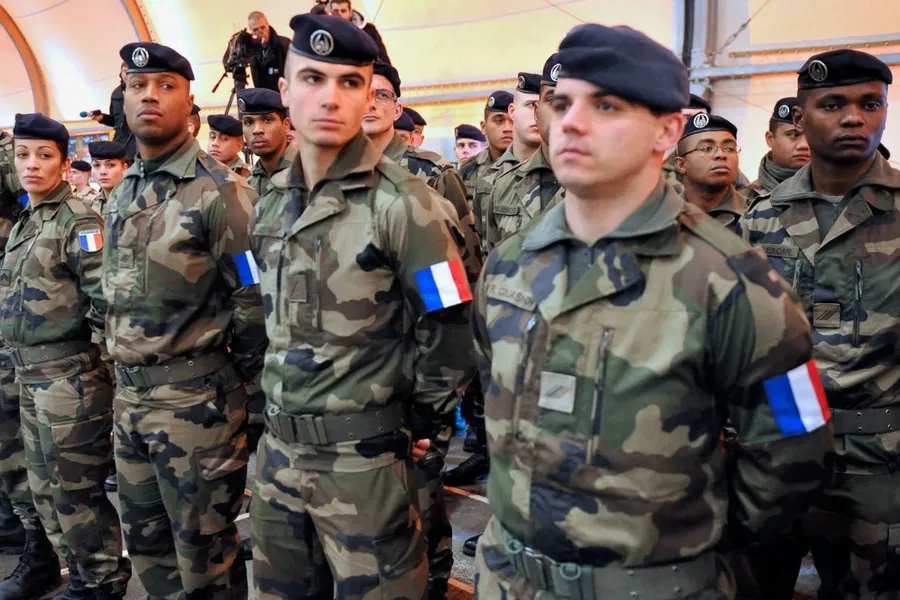
- PowerIndex: ~0.1888
- Active Personnel: ~205,000
- Defense Budget: ~$53 billion
- Strengths: Nuclear arsenal, overseas bases, Rafale jets
8. Japan
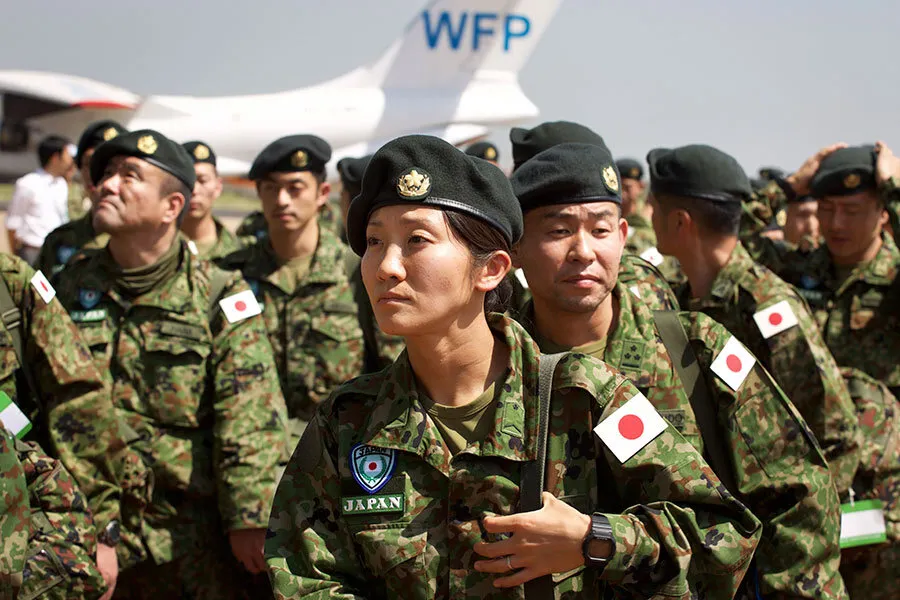
- PowerIndex: ~0.1601
- Active Personnel: ~247,000
- Defense Budget: ~$50 billion+
- Strengths: High-tech destroyers, F-35 fleet
9. Turkey
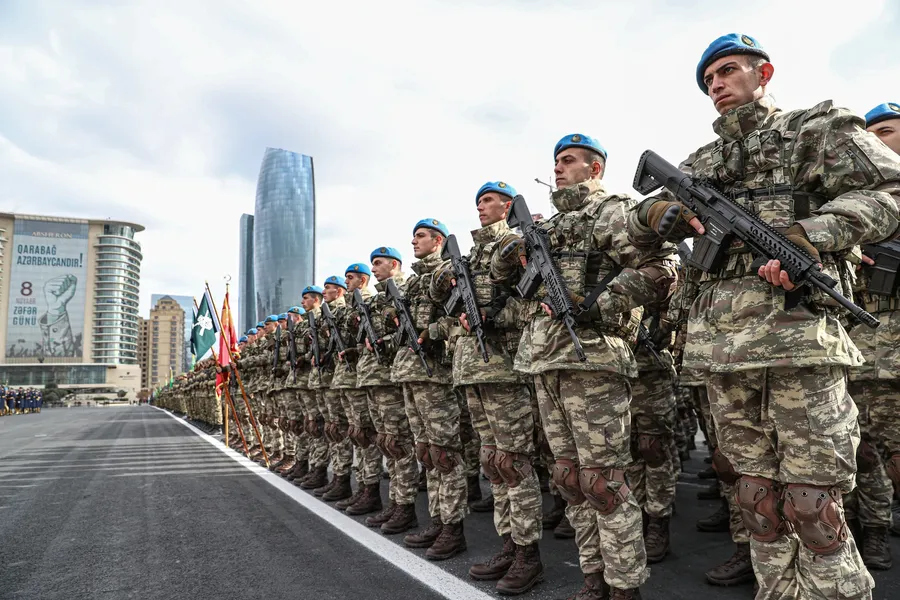
- PowerIndex: ~0.1697
- Active Personnel: ~355,000
- Defense Budget: ~$15-20 billion
- Strengths: Domestic drone production, large army
10. Italy
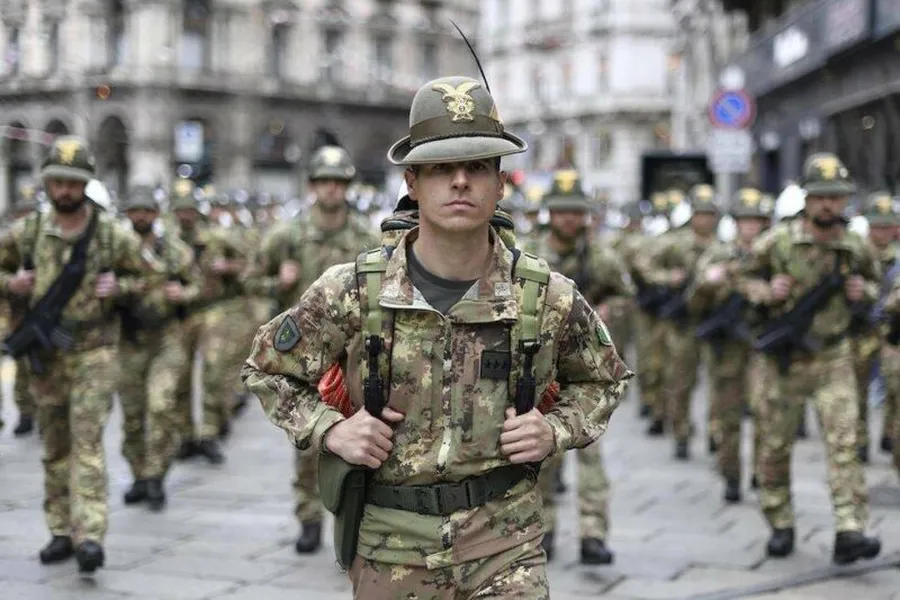
- PowerIndex: ~0.1973
- Active Personnel: ~165,000
- Defense Budget: ~$32 billion
- Strengths: Modern navy, air force, EU/NATO contributions
Top 10 Military Strength Comparison Table (2026)
| Rank | Country | PowerIndex | Active Personnel | Defense Budget |
|---|---|---|---|---|
| 1 | United States | ~0.0744 | 1.3M | $886B |
| 2 | Russia | ~0.0788 | 1.1M | $126B |
| 3 | China | ~0.0788 | 2.0M+ | $267B |
| 4 | India | ~0.1184 | 1.45M | $75B |
| 5 | South Korea | ~0.1416 | 500K | $50B |
| 6 | United Kingdom | ~0.1443 | 185K | $68B |
| 7 | France | ~0.1888 | 205K | $53B |
| 8 | Japan | ~0.1601 | 247K | $50B+ |
| 9 | Turkey | ~0.1697 | 355K | $15-20B |
| 10 | Italy | ~0.1973 | 165K | $32B |
Regional Military Power Breakdown
The strongest army/military in the world 2026 varies significantly by region due to geography, historical rivalries, resource availability, alliance structures, and threat perceptions. While global military ranking 2026 places the United States at the top overall, regional balances reveal different power dynamics—some areas dominated by a single superpower, others shaped by intense multi-nation competition. Understanding these regional hierarchies provides deeper insight into how the most powerful militaries 2026 project influence and deter aggression locally and globally.
Strongest Militaries in Asia
Asia hosts the most dynamic and rapidly evolving military landscape in 2026. China, India, South Korea, and Japan form the core of the strongest militaries in the world 2026 within this region, fueled by enormous defense budgets, large-scale modernization programs, indigenous weapons development, and escalating strategic competition—particularly in the South China Sea, Taiwan Strait, and along the Line of Actual Control (India–China border).
China leads with the world's largest active-duty force (~2 million+ personnel), the fastest-growing navy by number of ships, advanced hypersonic missiles, and massive investments in AI-integrated command systems. India counters with the fourth-largest army globally (~1.45 million active), growing indigenous capabilities (Tejas fighters, Agni missiles, aircraft carriers), and deepening QUAD partnerships. South Korea maintains one of the most technologically advanced forces per capita, with cutting-edge K2 Black Panther tanks, K9 Thunder artillery, and strong US alliance integration. Japan, despite constitutional limits, has rapidly expanded offensive capabilities (F-35 squadrons, helicopter carriers being converted to light carriers, hypersonic research), making it a critical pillar of Indo-Pacific deterrence in global military ranking 2026.
Strongest Militaries in Europe
Europe's military power in 2026 remains heavily anchored in NATO collective defense, with the United Kingdom, France, and Turkey emerging as the strongest militaries in the world 2026 on the continent. The UK contributes two Queen Elizabeth-class carriers, Trident nuclear submarines, advanced Typhoon and F-35 fighters, and expeditionary special forces with global reach. France maintains an independent nuclear deterrent (Force de Frappe), overseas bases across Africa and the Pacific, Rafale multirole fighters, and the Charles de Gaulle carrier—allowing it to operate independently or within coalitions.
Turkey stands out with one of Europe's largest standing armies (~355,000 active personnel), a powerful domestic defense industry (Bayraktar TB2 drones now combat-proven worldwide, Altay tank program, MILGEM corvettes), and strategic geographic position controlling the Bosporus. Other notable European powers (Germany, Italy, Poland) are rapidly increasing spending post-2022 Ukraine conflict, but the UK–France–Turkey triad provides the most balanced combination of nuclear, naval, air, and land projection capabilities in the strongest army in the world 2026 European context.
Strongest Militaries in the Americas
The Americas show the most lopsided regional military balance on Earth in 2026. The United States overwhelmingly dominates as the strongest military in the world 2026 not only globally but also hemispherically, with unmatched power projection (11 supercarriers, global satellite networks, 800+ overseas bases), defense spending dwarfing all others combined, and technological superiority across every domain.
Brazil ranks as the second strongest in South America with a capable navy (submarine program including nuclear propulsion ambitions), large army, and growing aerospace sector (Embraer KC-390 transport, Gripen fighters), but remains far behind the US in every metric. Other nations (Mexico, Colombia, Argentina) maintain respectable internal security and regional patrol forces but lack blue-water or strategic depth. This near-monopoly reinforces US strategic primacy in the Western Hemisphere within global military ranking 2026.
Strongest Militaries in Africa & Middle East
The Middle East and Africa feature intense localized competition and asymmetric threats, with Israel, Egypt, Saudi Arabia, Iran, and Turkey (with regional overlap) ranking among the most powerful militaries 2026 in these areas. Israel leads with unmatched qualitative edge—advanced Iron Dome, David's Sling, Arrow missile defenses, F-35I Adir stealth fighters, elite cyber/intelligence units, and a small but highly lethal nuclear-capable force. Egypt maintains the largest army in Africa (~440,000 active), modernized with French Rafales, Russian MiG-29s, and US M1 Abrams tanks, plus control of the Suez Canal.
Saudi Arabia invests heavily in US-supplied platforms (F-15SA, Patriot systems, THAAD), while Iran emphasizes asymmetric capabilities (ballistic missiles, drones, proxy forces). Turkey's influence extends through drone exports, military bases in Somalia and Qatar, and large conventional forces. These nations combine advanced imported systems, domestic production, and strategic geography to shape the strongest army in the world 2026 dynamics across the broader Middle East–Africa theater.
Most Powerful Army by Military Branch
While overall national rankings evaluate combined arms strength, breaking down the strongest military in the world 2026 by branch reveals specialized dominance that shapes modern conflict outcomes. Each domain—land, air, sea—has unique leaders whose capabilities often determine success in specific theaters or mission types within global military ranking 2026.
Strongest Army (Land Forces)
Russia maintains the strongest land army in the world 2026 in terms of sheer conventional ground combat power. With approximately 12,000 main battle tanks (T-72, T-80, T-90, and modernized T-14 Armata variants), vast quantities of self-propelled artillery (2S19 Msta, 2S35 Koalitsiya-SV), multiple rocket launchers (BM-30 Smerch, TOS-1A), and extensive engineer/electronic warfare units, Russia excels in large-scale mechanized maneuver warfare and artillery saturation—lessons reinforced in ongoing European conflicts.
China follows closely with massive numbers of modernized Type 99 and Type 96 tanks, PLZ-05 howitzers, and integrated rocket forces. The United States, while possessing fewer tanks (~5,500 M1 Abrams), emphasizes quality (active protection systems, networked lethality) and unmatched global mobility through airlift and prepositioned stocks—making it the most deployable land force despite not leading in raw numbers.
Strongest Air Force (Air Power)
The United States Air Force (and overall US air component including Navy/Marine aviation) remains the undisputed leader in air power for the strongest military in the world 2026. With over 13,000 total aircraft—including ~1,800+ fighters (F-35 Lightning II stealth multirole, F-22 Raptor air superiority, F-15EX Eagle II), strategic bombers (B-2 Spirit, B-21 Raider in early deployment), global tanker fleet (KC-46 Pegasus), and unmatched ISR platforms (RQ-4 Global Hawk, E-3 Sentry AWACS)—the US maintains air dominance across any theater through stealth, sensor fusion, long-range precision strike, and worldwide refueling capability.
China and Russia field capable regional air forces (J-20 stealth fighters, Su-57, advanced S-400/S-500 air defenses), but lack the global reach, pilot training depth, and combined arms integration that define US air superiority in global military ranking 2026.
Strongest Navy (Sea Power)
The United States Navy is the clear leader in sea power for the strongest army/military in the world 2026, operating 11 nuclear-powered supercarriers (Nimitz and Ford classes), ~70 nuclear attack submarines, ~90 destroyers/cruisers with Aegis combat systems, and global logistics ships—enabling true blue-water power projection anywhere on the planet. No other navy matches this carrier-centric, global strike capability.
China has overtaken the US in total hull count (~370 ships vs ~290) and leads in corvettes/frigates and shipbuilding speed, rapidly fielding Type 055 destroyers, Type 075 amphibious assault ships, and aircraft carriers (Fujian under trials). However, US qualitative advantages (catapult carriers, carrier air wing experience, submarine stealth/quieting) and allied networks still ensure dominance in open-ocean operations among most powerful militaries 2026.
Military Technology & Future Warfare Trends (2026)
The strongest military in the world 2026 is increasingly defined not just by traditional platforms but by integration of disruptive technologies that reshape how wars are fought, won, and deterred. The convergence of artificial intelligence, autonomous systems, hypersonic weapons, cyber-space operations, quantum technologies, and directed energy systems is creating a new era of warfare where speed, information dominance, and precision outweigh sheer mass in many scenarios.
Unmanned aerial systems (UAS) have matured into decisive battlefield tools. The United States fields advanced MQ-9 Reaper and RQ-4 Global Hawk platforms for persistent ISR and strike, while Turkey's Bayraktar TB2 and Akinci drones have proven game-changing in multiple conflicts—low-cost, attritable, and exportable. Swarm drone tactics, AI-guided loitering munitions, and counter-drone systems (laser, microwave, electronic jamming) are now standard considerations for the most powerful militaries 2026.
Artificial intelligence and autonomy are transforming targeting, logistics, and decision-making. AI-enabled sensor fusion accelerates threat detection (e.g., Project Maven derivatives), autonomous wingmen accompany manned fighters (US CCA program), and predictive maintenance reduces downtime. Quantum computing threatens to break current encryption while enabling ultra-secure communications and faster simulations—major powers are racing to achieve quantum advantage for military simulation and cryptography superiority in global military ranking 2026.
Hypersonic weapons (speeds > Mach 5, maneuverable trajectories) fundamentally challenge missile defense. Russia (Avangard, Kinzhal), China (DF-17, DF-27), and the US (ARRW, HACM) all field or near-deploy hypersonics—reducing reaction time to minutes and forcing adversaries to rethink basing and hardening strategies. Directed energy weapons (high-energy lasers, high-power microwaves) are transitioning from prototype to operational use for counter-drone, missile defense, and precision strike—offering near-infinite magazines at low per-shot cost.
Cyber and space domains are now co-equal warfighting arenas. Offensive cyber operations can disable power grids, command networks, or financial systems before kinetic action begins. Resilient satellite constellations (US Space Development Agency's proliferated low-Earth orbit architecture), anti-satellite capabilities, and space-based early warning systems protect or deny orbital advantage—critical for GPS, communications, and ISR that underpin modern joint operations among the strongest army in the world 2026 contenders.
These trends indicate that future conflicts will be decided as much in the cognitive and electromagnetic domains as on the physical battlefield—favoring militaries that best integrate human-machine teaming, resilient networks, and rapid innovation cycles in the strongest military in the world 2026 era.
Frequently Asked Questions – Strongest Military in the World 2026
The United States has the strongest army/military in the world 2026, leading in technology, budget, and global reach.
Yes, the US remains #1 as the strongest military in the world 2026 per Global Firepower metrics.
The United States spends the most (~$886 billion) on defense in 2026-2027 projections.
China has the largest active army (~2 million+ personnel) in the strongest military in the world 2026 context.
Conclusion – Summary of Global Military Strength in 2026
The strongest army/military in the world 2026 underscores US leadership amid rising challengers like China and resilient powers like Russia. Key takeaways: technology and alliances will define future geopolitics, with most powerful militaries 2026 investing heavily in AI, space, and cyber to maintain edge.
Sources & References
- Global Firepower Index (globalfirepower.com) – Primary ranking source for strongest military in the world 2026
- Defense budget and equipment projections from official reports and analyses
- Geopolitical insights from strategic studies on most powerful militaries 2026