
Page Outline
- Direct Quick Answer
- Richest Country in Western Europe 2026 – At a Glance
- Top 10 Richest Countries in Western Europe 2026
- What Makes a Country Rich in Western Europe?
- Richest Country in Western Europe by GDP (Total Economy)
- Richest Country in Western Europe by GDP Per Capita
- Why Luxembourg Is the Richest Country in Western Europe in 2026
- Finance, Innovation & Wealth Distribution in Western Europe
- Comparison With Previous Years (2024–2025)
- Richest Country in Western Europe vs World Ranking
- Frequently Asked Questions
- Final Takeaway
The richest country in Western Europe in 2026 is Luxembourg, when measured by GDP per capita — the clearest indicator of average wealth and living standards. With an estimated GDP per capita of approximately $140,000–$145,000 (nominal) or over $155,000 PPP-adjusted, Luxembourg significantly outpaces all other Western European nations. This exceptional prosperity stems from its position as the world’s second-largest investment fund center, massive cross-border workforce, low taxes, banking secrecy traditions, and stable, business-friendly governance.
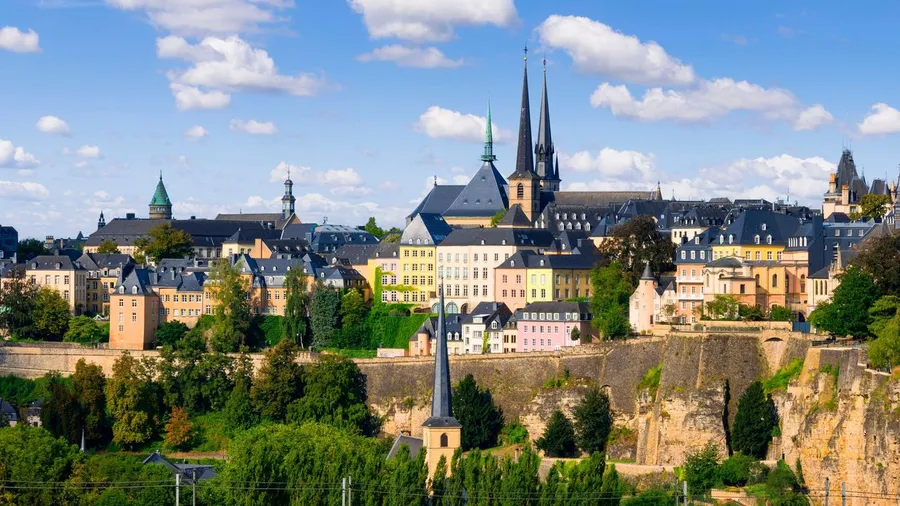
Richest Country in Western Europe 2026 – At a Glance
- 🌍 Richest Country (by GDP per capita): Luxembourg
- 💰 GDP (nominal 2026 est.): ≈ $95–100 billion
- 👤 GDP per Capita (nominal): ≈ $140,000–$145,000
- 🏦 Main Economic Sectors: Financial services (funds, banking), steel, tech, logistics
- 📈 Average Annual Growth (2023–2026): ≈2.8–4.2%
- Population: ≈660,000 (high cross-border workforce boosts per-capita figures)
Top 10 Richest Countries in Western Europe 2026 (by GDP per Capita)
| Rank | Country | GDP per Capita (USD) | Main Income Source |
|---|---|---|---|
| 1 | Luxembourg | ≈$140,000–145,000 | Finance & investment funds |
| 2 | Ireland | ≈$110,000–115,000 | Tech multinationals & pharma |
| 3 | Switzerland | ≈$105,000–110,000 | Banking, pharma, watches |
| 4 | Norway | ≈$95,000–100,000 | Oil & gas, sovereign fund |
| 5 | Denmark | ≈$72,000–76,000 | Pharma, shipping, renewables |
| 6 | Iceland | ≈$70,000–74,000 | Tourism, fisheries, aluminum |
| 7 | Netherlands | ≈$68,000–72,000 | Trade, logistics, tech |
| 8 | Belgium | ≈$60,000–64,000 | Services, chemicals, diamonds |
| 9 | Austria | ≈$62,000–66,000 | Manufacturing, tourism, finance |
| 10 | Sweden | ≈$65,000–69,000 | Engineering, tech, autos |
Note: Figures are 2026 estimates (nominal USD) based on IMF, Eurostat, OECD trends & projections. Rankings prioritize GDP per capita as the best measure of average wealth. Western Europe includes high-income EU + non-EU states (Switzerland, Norway, Iceland).
What Makes a Country Rich in Western Europe?
Western Europe contains some of the world’s wealthiest societies, with high income levels across the board. Determining the richest country in Western Europe depends on the definition. Total GDP measures overall economic power and size — favoring larger nations like Germany, France, and the UK. However, GDP per capita (total GDP divided by population) provides the most accurate reflection of average income, living standards, purchasing power, and individual prosperity — the metric most economists and international organizations use when ranking the wealthiest countries in Western Europe.
Several factors explain why certain nations consistently top the list:
- Financial & investment hubs: Luxembourg manages trillions in funds; Switzerland excels in private banking; Ireland attracts tech/pharma multinationals.
- Resource wealth & funds: Norway leverages oil via its massive sovereign wealth fund (> $1.7 trillion).
- High human capital & education: Excellent universities, STEM focus, and skilled workforces (Nordics, Switzerland, Netherlands) drive innovation and high wages.
- Political stability & governance: Low corruption, strong rule of law, and investor confidence (Luxembourg, Switzerland, Denmark) attract capital.
- Small population advantage: Smaller nations (Luxembourg, Iceland, Ireland) spread economic output across fewer people, inflating per-capita figures.
When identifying the richest country in Western Europe in 2026, GDP per capita remains the gold standard for average prosperity, while total GDP highlights economic scale and global influence.
Richest Country in Western Europe by GDP (Total Economy Size) 2026
By total nominal GDP, Germany remains Western Europe’s largest economy in 2026, followed by France and the United Kingdom. Germany’s lead comes from its industrial strength, export dominance, and large domestic market.
- Germany: ≈ $4.9–5.2 trillion — autos, machinery, chemicals, engineering exports.
- France: ≈ $3.3–3.6 trillion — luxury goods, aerospace, agriculture, tourism, nuclear energy.
- United Kingdom: ≈ $3.6–3.9 trillion — finance (London), services, creative industries, tech.
Germany’s economy is roughly 1.5 times larger than France’s or the UK’s — making it Western Europe’s economic powerhouse by overall size.
Richest Country in Western Europe by GDP Per Capita 2026
When wealth is measured per person, Luxembourg leads Western Europe in 2026 by a significant margin, thanks to its role as the world’s second-largest investment fund center, massive cross-border workforce (≈200,000 daily commuters from France/Belgium/Germany), low taxes, and financial services dominance. Ireland follows, boosted by tech/pharma multinationals using favorable tax structures. Switzerland, Norway, and Denmark round out the top five with high productivity, innovation, and resource or financial strengths.
These leaders show that specialization, EU/global openness, and excellent governance can generate extraordinary per-capita wealth in Western Europe.
Why Luxembourg Is the Richest Country in Western Europe in 2026
Global Financial & Investment Powerhouse
Luxembourg is the world’s second-largest center for investment funds (after the US), managing trillions in assets. Its banking sector, private banking, and fintech ecosystem attract global wealth, generating enormous fee income per resident.
Extremely High Income & Living Standards
With GDP per capita ≈$140,000–$145,000, Luxembourgers enjoy one of the highest living standards globally — universal healthcare, excellent education, low unemployment, and top-tier infrastructure.
Exceptional Stability & Governance
Luxembourg consistently ranks among the world’s least corrupt nations, with strong rule of law, political stability, and pro-business policies that make it a magnet for multinational HQs and high-net-worth individuals.
Key Growth & Structural Factors
A large cross-border workforce boosts GDP without adding to resident population, inflating per-capita figures. Steel (ArcelorMittal legacy), logistics, and emerging tech/fintech sectors add depth.
Finance, Innovation & Wealth Distribution in Western Europe
Western Europe has limited raw natural resources but excels in human capital, finance, and high-value industry. Luxembourg and Switzerland dominate banking/funds; Ireland leverages tech/pharma tax advantages; Nordics invest in education, renewables, and innovation; Germany/France lead in manufacturing and luxury. Sovereign wealth (Norway) and EU funds support long-term growth.
Wealth distribution is relatively even in Nordics (Gini ≈0.25–0.28) thanks to welfare systems; Luxembourg and Switzerland have higher inequality but high absolute levels. Strong institutions, education, and openness to capital turn talent and finance into exceptional prosperity across Western Europe’s leaders.
Comparison With Previous Years (2024–2025)
Luxembourg has held the #1 spot for GDP per capita in Western Europe for over two decades, with steady gains driven by finance and cross-border dynamics. Ireland moved up sharply in recent years due to tech/pharma relocations. Norway remains high due to oil wealth and fund returns. Post-pandemic recovery, energy prices (benefiting Norway), and inflation adjustments have slightly narrowed gaps, but the top tier remains consistent.
By 2026, green transition investments and AI/tech growth further solidify Luxembourg, Ireland, and Switzerland as leaders in high-value, future-proof economies.
Richest Country in Western Europe vs World Ranking 2026
Luxembourg ranks #1 or #2 globally for GDP per capita (≈$140,000–$145,000 nominal), often trading places with Monaco or Liechtenstein (microstates). Ireland and Switzerland sit in the global top 5–10. Norway, Denmark, and Iceland are usually top 15–20 worldwide. Larger economies like Germany, France, and the UK fall in the $50,000–$65,000 range — high-income but behind small-state leaders. Western Europe dominates the global top 20 richest countries list, reflecting advanced institutions, innovation, and high productivity.
Frequently Asked Questions
Luxembourg is the richest country in Western Europe in 2026 by GDP per capita (≈$140,000–$145,000), driven by its global finance hub status, banking, and massive investment funds.
No — Germany has Western Europe’s largest total GDP, but its per-capita wealth is lower due to its 84 million population. Luxembourg, Ireland, and Switzerland rank far higher per person.
Luxembourg leads with ≈$140,000–$145,000 nominal GDP per capita in 2026, followed by Ireland and Switzerland. These figures reflect average income and living standards.
Among Western European high-income nations, Portugal and Greece rank lowest, with GDP per capita around $28,000–$32,000 — still high globally but below Nordic and Benelux levels due to structural challenges.
Primarily by GDP per capita (total GDP ÷ population), which shows average economic output per person. Other indicators include GNI per capita, PPP adjustments, and Human Development Index.
Final Takeaway
In 2026, Luxembourg stands as the richest country in Western Europe when wealth is measured by average income and living standards (GDP per capita). While Germany, France, and the UK lead in total economic size, small, highly specialized nations with world-class finance, innovation, and governance consistently deliver far higher prosperity per person. Western Europe’s wealth story highlights the power of institutions, openness, and high-value sectors — offering lessons for sustainable prosperity across the continent and beyond.