
Page Outline
- Direct Quick Answer
- Richest Country in Asia 2026 – At a Glance
- Top 10 Richest Countries in Asia 2026
- What Makes a Country Rich in Asia?
- Richest Country in Asia by GDP (Total Economy)
- Richest Country in Asia by GDP Per Capita
- Why Singapore Is the Richest Country in Asia in 2026
- Natural Resources, Innovation & Wealth Distribution
- Comparison With Previous Years (2024–2025)
- Richest Country in Asia vs World Ranking
- Frequently Asked Questions
- Final Takeaway
The richest country in Asia in 2026 is Singapore, when measured by GDP per capita — the clearest indicator of average wealth and living standards. With an estimated GDP per capita of approximately $88,000–$92,000 (nominal) or over $140,000 PPP, Singapore far outpaces all other Asian nations. This remarkable achievement stems from its position as a global financial and trade hub, world-class infrastructure, zero corruption, innovation-driven economy, and strategic policies that attract massive foreign investment and talent despite having no natural resources.
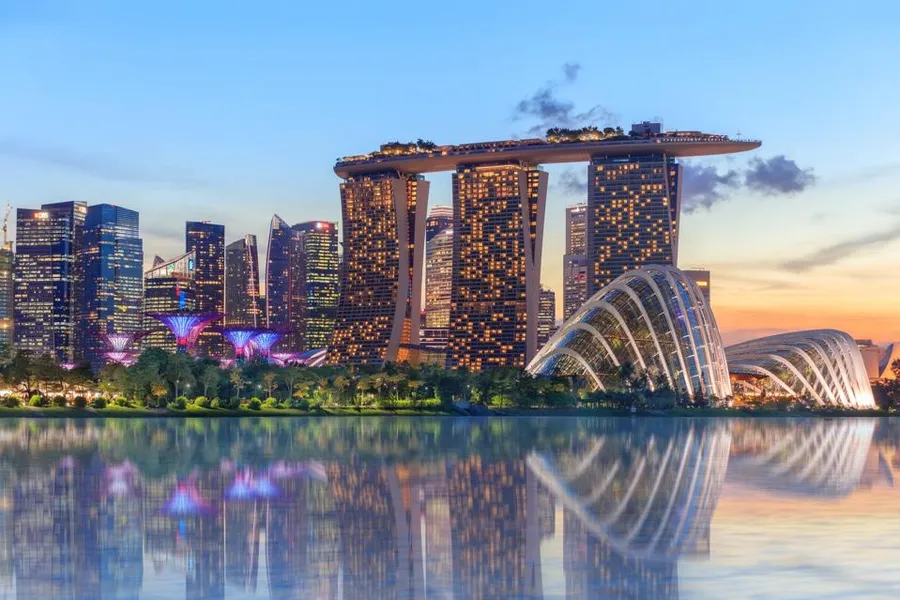
Richest Country in Asia 2026 – At a Glance
- 🌍 Richest Country (by GDP per capita): Singapore
- 💰 GDP (nominal 2026 est.): ≈ $520–550 billion
- 👤 GDP per Capita (nominal): ≈ $88,000–$92,000
- 🏦 Main Economic Sectors: Financial services, trade & logistics, technology, manufacturing, tourism
- 📈 Average Annual Growth (2023–2026): ≈3.5–4.8%
- Population: ≈5.9–6.0 million (highly skilled, cosmopolitan workforce)
Top 10 Richest Countries in Asia 2026 (by GDP per Capita)
| Rank | Country | GDP per Capita (USD) | Main Income Source |
|---|---|---|---|
| 1 | Singapore | ≈$88,000–92,000 | Finance, trade, tech |
| 2 | Qatar | ≈$72,000–78,000 | Natural gas & oil |
| 3 | United Arab Emirates | ≈$53,000–57,000 | Oil, finance, tourism |
| 4 | Brunei | ≈$41,000–45,000 | Oil & gas |
| 5 | Hong Kong | ≈$52,000–55,000 | Finance, trade, logistics |
| 6 | Kuwait | ≈$38,000–42,000 | Oil exports |
| 7 | South Korea | ≈$38,000–41,000 | Technology, manufacturing, autos |
| 8 | Japan | ≈$40,000–43,000 | Manufacturing, tech, autos |
| 9 | Taiwan | ≈$36,000–39,000 | Semiconductors, electronics |
| 10 | Saudi Arabia | ≈$32,000–35,000 | Oil, Vision 2030 diversification |
Note: Figures are 2026 estimates (nominal USD) based on IMF, World Bank, and national projections. Rankings use GDP per capita as the primary measure of average wealth and prosperity.
What Makes a Country Rich in Asia?
Asia is home to both the world’s largest economies and some of its wealthiest societies per person. Determining the richest country in Asia depends heavily on how “rich” is defined. Total GDP measures overall economic power — favoring giants like China, India, and Japan — but it doesn’t show how wealth is shared among citizens. GDP per capita divides total output by population, giving a much clearer picture of average income, living standards, and individual prosperity — the metric most experts use to identify the wealthiest countries in Asia.
Key factors that drive high wealth in Asia include:
- Strategic location & trade: Singapore and Hong Kong thrive as global ports and financial gateways.
- Financial & innovation hubs: Advanced banking, fintech, and tech ecosystems (Singapore, Hong Kong, South Korea, Taiwan).
- Resource wealth: Oil and gas exports create massive revenues in Qatar, UAE, Kuwait, Brunei, and Saudi Arabia.
- Human capital & education: High literacy, STEM focus, and skilled workforces (Singapore, South Korea, Japan, Taiwan).
- Political stability & governance: Low corruption, rule of law, and business-friendly policies attract investment (Singapore, UAE, Qatar lead here).
- Population size: Small populations concentrate wealth — city-states and Gulf monarchies often top per-capita lists.
So when identifying the richest country in Asia in 2026, GDP per capita remains the gold standard, while total GDP highlights economic scale and global influence.
Richest Country in Asia by GDP (Total Economy Size) 2026
By total nominal GDP, China remains Asia’s — and the world’s — largest economy in 2026, followed by Japan and India. These three powerhouses dominate due to massive populations, manufacturing strength, and rapid growth in services and technology.
- China: ≈ $19.5–20.5 trillion — world’s factory, tech giant, Belt & Road investments, huge domestic market.
- Japan: ≈ $4.3–4.6 trillion — advanced manufacturing, robotics, autos, electronics, financial services.
- India: ≈ $4.1–4.4 trillion — fastest-growing major economy, IT services, pharmaceuticals, agriculture, young workforce.
However, total size doesn’t equal personal wealth. China’s 1.4 billion people and India’s 1.45 billion mean their per-capita figures are significantly lower than smaller, highly developed economies.
Richest Country in Asia by GDP Per Capita 2026
When wealth is measured per person, small, highly developed economies rise to the top. Singapore leads comfortably in 2026, thanks to its unmatched combination of finance, logistics, innovation, zero corruption, and strategic policies. Qatar and the UAE follow, fueled by vast hydrocarbon wealth carefully invested into sovereign funds, infrastructure, and diversification. Brunei remains high due to oil/gas income and tiny population. Hong Kong continues as a global financial powerhouse despite political challenges.
These top performers show that strategic location, excellent governance, and openness to global capital often outweigh raw resource volume in creating per-capita wealth across Asia.
Why Singapore Is the Richest Country in Asia in 2026
Global Financial & Trade Powerhouse
Singapore is one of the world’s leading financial centers, hosting thousands of multinational banks, asset managers, fintech startups, and the busiest transshipment port on Earth. It handles massive flows of capital, trade, and wealth management for Asia and beyond.
Extremely High Income & Living Standards
With GDP per capita ≈$90,000 nominal (over $140,000 PPP), average Singaporeans enjoy one of the highest standards of living globally — excellent healthcare, world-class education, low taxes for high earners, and top-tier infrastructure.
Exceptional Stability & Governance
Singapore consistently ranks #1 or #2 globally for ease of doing business, lowest corruption (Transparency International), rule of law, and political stability — creating unmatched investor and talent confidence.
Key Growth & Innovation Sectors
Beyond finance and logistics, Singapore excels in biotech, pharmaceuticals, semiconductors, AI, green tech, and smart-city solutions. Government-led initiatives (Research, Innovation and Enterprise 2025 plan) and massive foreign talent inflow keep it at the cutting edge.
Natural Resources, Innovation & Wealth Distribution in Asia
While Gulf states rely heavily on oil and gas (Qatar, UAE, Kuwait, Saudi Arabia, Brunei), East Asian powerhouses built wealth through manufacturing, technology, and services with almost no natural resources (Singapore, Japan, South Korea, Taiwan). China and India combine scale with rapid industrialization and digital growth.
Success stories show diversification is key: Gulf nations invest oil wealth into sovereign funds (Qatar Investment Authority, Abu Dhabi’s ADIA, Saudi PIF) to fund Vision 2030-style reforms, tourism, finance, and tech. Meanwhile, Singapore and Hong Kong turned geographic advantage into permanent financial/trade dominance. Wealth distribution varies — Singapore has moderate inequality but strong social safety nets, while resource states sometimes face higher Gini coefficients unless sovereign funds benefit citizens broadly.
Comparison With Previous Years (2024–2025)
Singapore has held the #1 spot for GDP per capita in Asia for over a decade, with steady gains driven by finance, tech, and resilience to global shocks. Qatar and UAE remain stable in the top three, benefiting from elevated energy prices post-2022. Hong Kong slipped slightly due to political and real-estate challenges but stays strong. India and China continue climbing total GDP rankings but remain mid-tier in per-capita terms due to population size.
By 2026, post-pandemic recovery, supply-chain shifts, and green-energy transitions have further widened the gap between diversified high-income economies and resource-dependent ones.
Richest Country in Asia vs World Ranking 2026
Singapore ranks among the top 5–7 wealthiest countries globally by GDP per capita (≈$90,000 nominal), competing with Luxembourg, Switzerland, Norway, Ireland, and Qatar. Qatar and UAE also sit in the global top 15–20. Japan, South Korea, and Taiwan fall in the $35,000–$43,000 range — high-income but behind Western leaders. China and India, despite huge total GDPs, rank much lower per capita due to massive populations.
This shows Asia contains both global wealth leaders (city-states & Gulf) and fast-growing giants still bridging the development gap.
Frequently Asked Questions
Singapore is the richest country in Asia in 2026 by GDP per capita (≈$88,000–$92,000), driven by its global finance hub status, trade, innovation, and exceptional governance.
No — China has Asia’s (and the world’s) largest total GDP, but its per-capita wealth is much lower due to its 1.4 billion population. Singapore, Qatar, and UAE rank far higher per person.
Singapore leads with ≈$88,000–$92,000 nominal GDP per capita in 2026, followed by Qatar and the United Arab Emirates. These figures reflect average income and living standards.
Afghanistan, Yemen, North Korea, Nepal, and Timor-Leste consistently rank among Asia’s poorest, with GDP per capita below $2,000–$3,000 due to conflict, isolation, or underdevelopment.
Primarily by GDP per capita (total GDP ÷ population), which shows average economic output per person. Other indicators include GNI per capita, Human Development Index, and purchasing power parity (PPP) adjustments.
Final Takeaway
In 2026, Singapore stands as the richest country in Asia when wealth is measured by average income and living standards (GDP per capita). While China, Japan, and India dominate in total economic size, smaller, highly developed economies with strong governance, finance, and innovation consistently deliver far higher prosperity per person. Asia’s economic story is one of contrasts — from resource-rich Gulf states to tech-driven East Asian tigers — showing that smart policies and openness to global capital can create exceptional wealth even without natural resources.